A stolen PIN takes less than three seconds to capture on camera, and a mistyped account number can send your money to a stranger with no way back. Withdrawing funds sounds like the simplest financial act imaginable - press a few buttons, get your cash, move on with your day. Yet the mechanics behind that simplicity hide a surprising number of failure points, from skimming devices bolted onto ATM card slots to bank transfers that silently vanish because of one wrong digit.
Most people treat withdrawal as an afterthought, something to think about only after the money has already been deposited or won. That mindset is backwards. The way you take money out matters just as much as how you put it in, and the right approach depends on your situation, your location, and the amount involved. For readers who want a clear breakdown of the process, resources like how to withdraw explain platform-specific steps, but the broader principles of security and efficiency apply no matter where your funds originate.
This piece breaks down the practical realities of withdrawal methods - comparing cash and bank transfer options, walking through ATM cash withdrawal safety, and offering concrete cash withdrawal tips that reduce risk without adding friction to your routine. By the end, you'll know exactly how to withdraw funds securely, whichever method you choose.
Understanding the Main Withdrawal Methods Available Today
Cash Withdrawals: Immediate but Limited
Cash remains the most direct withdrawal method. You request it, you receive it, and the transaction ends the moment the bills hit your hand. No waiting period, no third-party processing delay. The trade-off is exposure - physical cash can be lost, stolen, or misplaced, and large sums carried in public create obvious risk. Daily withdrawal limits imposed by banks and ATM networks also cap how much you can pull at once, which matters if you're planning a significant cash-based transaction.
Bank Transfer Withdrawal: Slower but Traceable
Bank transfer withdrawal shifts funds electronically from one account to another, typically through domestic clearing systems or wire networks for international transactions. The appeal lies in the paper trail: every transfer generates a record, timestamped and tied to verified account holders on both ends. Processing time varies - domestic transfers often settle within one to three business days, while international wires can take longer depending on intermediary banks and currency conversion steps.
Digital and Hybrid Options
Many platforms now offer withdrawal methods that blend speed with accountability, such as e-wallets or prepaid card loads that draw from a linked account. These sit between instant cash and delayed bank transfers, often clearing within hours rather than days. They're worth considering when you need faster access than a bank transfer provides but want more security than carrying physical cash.
Cash Withdrawal Tips for Everyday Safety
Timing and Location Choices
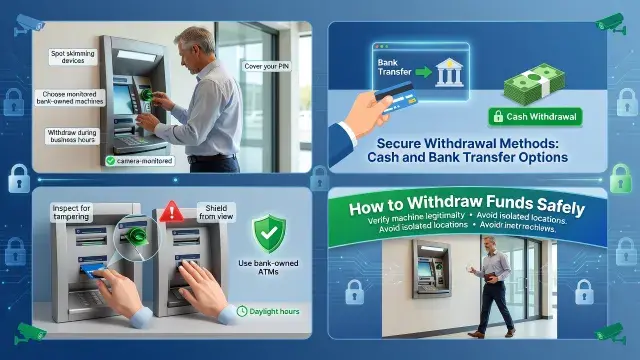
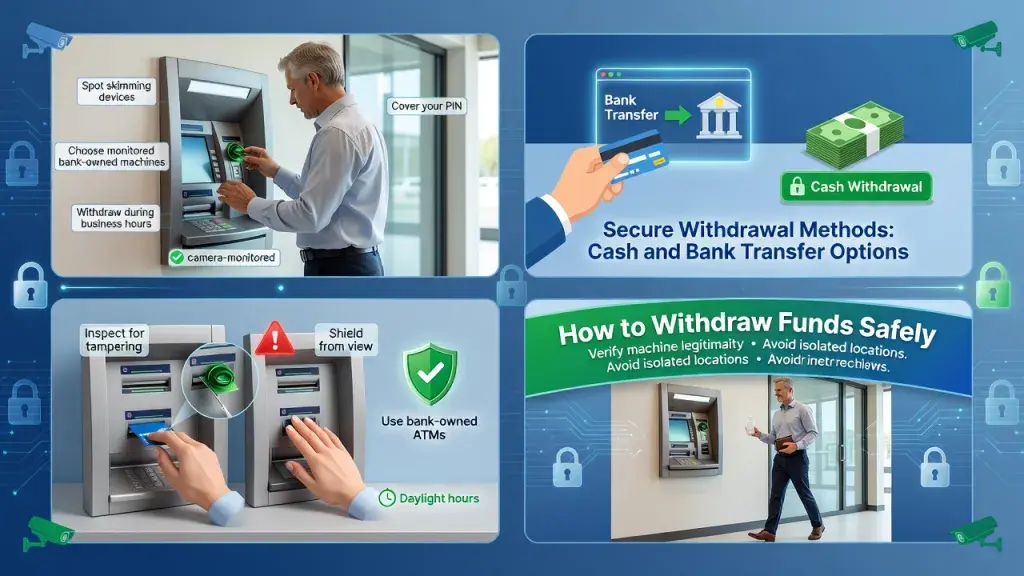
Withdraw cash during daylight hours whenever possible, and choose locations inside banks or well-monitored retail environments over standalone street kiosks. Foot traffic and visible security cameras discourage opportunistic theft. If you're withdrawing a large amount, calling ahead so the branch can prepare the cash reduces the time you spend waiting at a counter with money already in hand.
Managing the Cash After Withdrawal
The moment after withdrawal is often the most vulnerable. Count your money away from public view, split large amounts across different pockets or bags rather than one visible wallet, and avoid checking your balance or the withdrawal receipt while still standing at the counter or machine. These small habits matter far more than people assume.
Setting Personal Limits
Decide in advance how much cash you're comfortable carrying and stick to it. Splitting a large withdrawal into two smaller visits, spaced a day apart, reduces the amount of exposed cash at any single moment - a simple but effective cash withdrawal tip that costs you only a little convenience.
- Withdraw during business hours at staffed locations when possible
- Keep cash out of sight immediately after leaving the counter
- Avoid discussing withdrawal amounts within earshot of others
- Use discreet bags or wallets rather than open envelopes
ATM Cash Withdrawal: What to Check Before You Insert Your Card
Spotting Skimming Devices
Card skimmers are thin overlays fitted onto the card slot, designed to copy your card's magnetic stripe data while a hidden camera or fake keypad captures your PIN. Before inserting your card, gently wiggle the card reader and the keypad - a loose or oddly textured attachment is a warning sign. Genuine ATM hardware feels solid and flush with the surrounding panel.
Choosing the Right Machine
ATMs located inside bank branches or attached to well-lit, camera-monitored buildings carry lower risk than freestanding units in isolated areas. Bank-owned machines also tend to receive more frequent maintenance checks, which reduces the window of opportunity for tampering.
Protecting Your PIN Entry
Cover the keypad with your free hand while entering your PIN, even if no one appears to be nearby. Shoulder-surfing and hidden cameras are both real threats, and this single habit neutralizes most of them. Never accept help from a stranger during an ATM cash withdrawal, no matter how the offer is framed.
After the Transaction
Take your card, your cash, and your receipt before walking away - discarded receipts often contain enough account information to be useful to a thief. If the machine behaves unusually, retains your card, or displays an error mid-transaction, contact your bank immediately rather than attempting the withdrawal again on the same machine.
Bank Transfer Withdrawal: Ensuring Accuracy and Security
Verifying Account Details Before Sending
The single most common cause of failed or misdirected bank transfer withdrawal requests is a transposed digit in the account or routing number. Double-check every field before confirming, and where possible, send a small test transfer first when dealing with a new recipient account.
Recognizing Secure Transfer Channels
Legitimate banking platforms use encrypted connections and require multi-factor authentication for withdrawal requests above certain thresholds. If a transfer interface asks for information unrelated to the transaction itself - such as your full card PIN or security question answers - treat that as a red flag rather than routine verification.
Understanding Processing Delays
Transfers flagged for manual review, often triggered by unusually large amounts or first-time recipients, can take longer than the standard window. This isn't a malfunction - it's a fraud-prevention step. Knowing this in advance prevents unnecessary panic when a transfer doesn't land instantly.
How to Withdraw Funds Securely Across Any Method
Confirming Identity Without Oversharing
Legitimate withdrawal processes will ask for identification appropriate to the amount and method involved. Be wary of requests for information that exceeds what the transaction reasonably requires - a bank transfer withdrawal doesn't need your social media passwords, and an ATM cash withdrawal doesn't need a secondary phone verification texted to an unfamiliar number.
Keeping Records of Every Transaction
Save confirmation numbers, screenshots, and receipts for every withdrawal, regardless of method. If a dispute arises later, this documentation is often the deciding factor in resolving it quickly.
Recognizing Common Withdrawal Scams
Fraudulent schemes frequently target people mid-withdrawal, offering to "help" at an ATM, sending fake confirmation messages for bank transfers, or requesting a small "processing fee" before releasing funds. None of these are legitimate practices from any regulated bank or platform.
Choosing the Right Withdrawal Method for Your Situation
When Speed Matters Most
If you need funds immediately, cash withdrawal or a digital hybrid option will outperform a standard bank transfer. Accept the added handling risk in exchange for speed, and apply the cash withdrawal tips outlined earlier to manage that risk responsibly.
When Documentation Matters Most
For larger amounts, tax reporting, or situations where a paper trail protects you legally, bank transfer withdrawal is the stronger choice despite the wait. The traceability outweighs the delay in nearly every case involving significant sums.
Balancing Convenience and Risk
There's no universally correct withdrawal method - only the one that fits your specific amount, urgency, and risk tolerance. Reassess your choice each time circumstances change rather than defaulting to habit.
Frequently Asked Questions
Is it safer to withdraw cash from an ATM or inside a bank branch?
Withdrawing inside a branch is generally safer for large amounts because staff can verify the transaction and monitor the environment directly. For routine, smaller withdrawals, a well-placed, bank-owned ATM in a monitored location offers comparable safety with more flexibility.
How long does a bank transfer withdrawal typically take to clear?
Domestic transfers usually settle within one to three business days, while international transfers can take longer due to intermediary banks and currency conversion. Delays beyond that window often indicate a manual review rather than an error.
What should I do if an ATM keeps my card during a withdrawal?
Contact your bank immediately using a number you already know to be legitimate, not one posted on the machine itself. Report the location and time, and monitor your account for any unauthorized activity in the following days.
Can I reverse a bank transfer if I sent it to the wrong account?
Reversal is possible in some cases if you contact your bank immediately, but it's not guaranteed once the receiving bank processes the funds. This is why verifying account details before confirming any transfer is critical.
Are there daily limits on how much cash I can withdraw?
Yes, most banks set daily withdrawal caps for both ATM and branch transactions, though limits vary by account type and institution. If you need to withdraw more than your limit allows, contact your bank in advance to arrange a larger one-time withdrawal.
What's the safest way to carry a large cash withdrawal home?
Split the cash across separate bags or pockets rather than keeping it all in one visible location, and avoid stopping at multiple public places on the way home. Traveling directly to your destination minimizes the window of exposure.