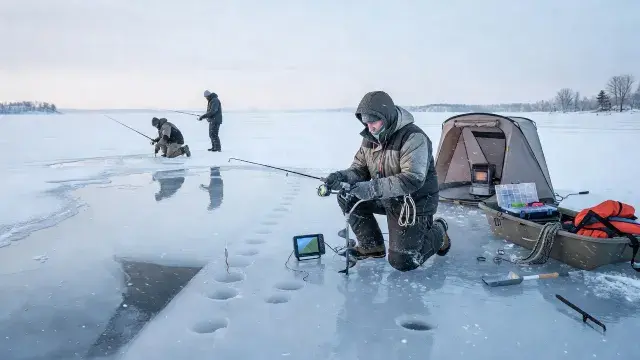
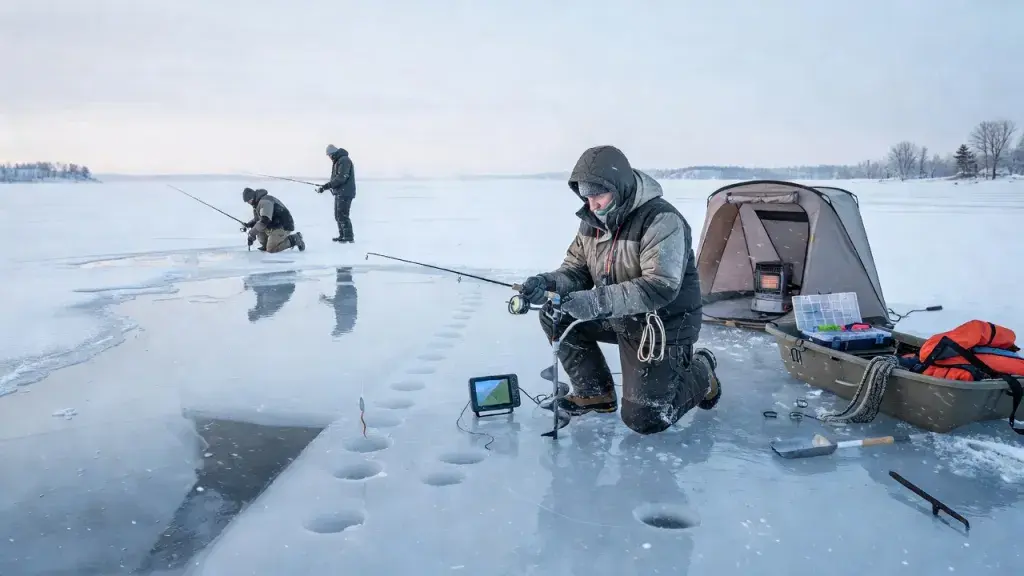
Four inches of clear, solid ice will hold an angler and gear. Two inches won't hold anything. That six-inch difference separates a productive afternoon on frozen water from a genuine emergency, and it's the first thing any newcomer needs to internalize before drilling a single hole. Ice fishing rewards patience and punishes overconfidence in roughly equal measure.
What draws people out onto a frozen lake in freezing temperatures isn't masochism - it's access. Fish that scatter across open water in summer concentrate in predictable zones under ice, and species like walleye, perch, and lake trout often feed more aggressively in the cold months than most people expect. Learning how to ice fish opens a season that many warm-weather anglers simply skip, leaving those waters far less pressured. For readers who want a taste of the strategy and thrill involved before heading out, this site offers a simulated take on the experience. But nothing replaces the real thing: the drill biting through ice, the sudden thump on the line, the quiet of a frozen bay at dawn.
This guide covers the gear worth buying, the techniques that actually produce fish, the regions where ice fishing thrives, and the safety practices that keep every trip from becoming a cautionary tale.
Understanding the Basics of Ice Fishing
Before investing in equipment, it helps to understand why ice fishing works the way it does. Cold water holds more dissolved oxygen than warm water, and fish metabolism slows dramatically once temperatures drop near freezing. That combination means fish don't need to chase food constantly - they wait, often near structure, for something to drift close enough to bite. Successful ice fishing tips almost always come back to this principle: locate the structure, then present bait with minimal, deliberate movement.
How Fish Behave Under Ice
Fish don't hibernate, but they do conserve energy. Panfish like bluegill and crappie often suspend at mid-depth over deeper basins, while walleye tend to patrol drop-offs near dusk and dawn. Lake trout, by contrast, may hold near the bottom in 30 to 60 feet of water throughout the day. Reading a fish finder or asking local bait shops about recent activity saves hours of blind drilling.
Reading Ice Thickness and Conditions
New, clear ice is far stronger than ice that's been through a thaw-and-refreeze cycle, even at the same thickness. White or "snow" ice is roughly half as strong as clear ice and should never be trusted at face value. A spud bar or ice chisel, used every few steps when venturing onto unfamiliar ice, remains the simplest verification tool available.
Differences Between Early, Mid, and Late Season
Early season ice (first few weeks of safe cover) often produces the most aggressive bites, since fish haven't yet adjusted to reduced light and pressure. Midwinter fishing, under thick ice and heavy snow cover, tends to slow down as oxygen levels drop in shallower lakes. Late season, as ice begins to honeycomb and weaken, can bring a final surge of activity - but this is also the most dangerous window of the entire season.
How to Ice Fish: A Step-by-Step Approach
Learning how to ice fish is less about memorizing a single method and more about running through a consistent sequence: locate, drill, present, and adjust. Anglers who treat every outing as an experiment tend to catch more fish than those who repeat the same spot and technique regardless of results.
Choosing a Location on the Ice
Start with a lake map or a summer memory of where structure exists - points, drop-offs, weed edges, submerged humps. These same features hold fish in winter, just at different depths depending on the species and time of day.
Drilling and Setting Up
Drill several holes in a cluster rather than committing to one spot immediately. Spacing holes 10 to 20 feet apart along a likely drop-off lets you test depths quickly without relocating your entire setup. Clear slush from each hole before dropping a line, since floating ice chips can interfere with bite detection.
Jigging Techniques and Presentation
Small, sharp lifts followed by a pause of several seconds often outproduce constant motion. Fish under ice are watching more than chasing, and an erratic jig can spook a cautious biter. Tipping a jig with a wax worm, spike, or small minnow adds scent and movement that a bare lure can't replicate.
When and How to Adjust Your Strategy
If twenty minutes pass without a bite or a mark on the fish finder, move. Ice fishing rewards mobility more than stubbornness. Changing jig color, lure size, or depth by even a few feet can trigger a strike from fish that ignored the previous presentation entirely.
Essential Ice Fishing Equipment
Quality ice fishing equipment doesn't need to be expensive, but certain items are non-negotiable. Skimping on the wrong tool can turn a manageable day into a miserable one.
Ice Augers: Manual vs. Powered
A hand auger works fine for occasional trips through thinner ice, but a gas or battery-powered auger saves significant effort once ice exceeds a foot in thickness or when drilling more than a handful of holes. Battery-powered augers have become popular for their quiet operation and lower maintenance compared to gas models.
Rods, Reels, and Tackle
Ice rods are shorter than open-water rods, typically 24 to 36 inches, designed for fishing directly over a hole rather than casting. Pair a light or ultralight rod with a smooth-drag reel and 2- to 6-pound test line for panfish, stepping up to heavier line for lake trout or northern pike. A tackle box stocked with a range of jig sizes, colors, and live or synthetic bait covers most situations.
Shelters, Heaters, and Comfort Gear
A portable pop-up shelter blocks wind and retains heat, extending how long anyone can comfortably stay on the ice. Propane heaters rated for outdoor or ventilated use add warmth but require caution around carbon monoxide buildup in enclosed shelters.
Electronics and Detection Tools
Flashers and underwater cameras have changed how ice anglers fish, showing real-time fish position and behavior beneath the hole. These tools aren't required for a first trip, but they dramatically shorten the learning curve for anyone serious about the sport.
- Ice auger (manual or powered)
- Ice rod and reel combo
- Jigs, spoons, and live bait
- Ice scoop for clearing slush
- Portable shelter or wind break
- Flasher or fish finder
- Sled for hauling gear
Best Ice Fishing Spots to Consider
The best ice fishing spots share a few traits regardless of region: reliable ice formation, healthy fish populations, and public access points that don't require a long trek across unstable ground.
Top Regions in North America
The upper Midwest - Minnesota, Wisconsin, and Michigan - remains the heart of ice fishing culture in the United States, with thousands of lakes freezing solid enough for extended seasons. The Dakotas and parts of Montana offer excellent walleye and perch fishing with far less crowding. In Canada, Ontario's countless lakes and Manitoba's deeper waters draw anglers chasing trophy pike and lake trout.
Lakes vs. Rivers vs. Reservoirs
Lakes freeze more predictably than rivers, where current can create unreliable and dangerous thin spots even in the coldest weather. Reservoirs often hold deep, structure-rich water that concentrates fish near old creek channels and submerged timber, making them productive once ice cover is confirmed safe.
How to Research Local Conditions
Bait shops, local fishing forums, and state or provincial natural resources departments typically post updated ice thickness reports during the season. Calling ahead beats relying on outdated online information, since conditions can shift within days after a warm spell or fresh snowfall.
Ice Fishing Safety: What Every Angler Must Know
Ice fishing safety isn't a footnote - it's the framework everything else depends on. More incidents happen from overconfidence on familiar lakes than from venturing onto unknown ice.
Minimum Ice Thickness Guidelines
A widely used guideline calls for at least four inches of clear, solid ice for walking or fishing on foot, five to seven inches for a snowmobile or ATV, and significantly more for any wheeled vehicle. These numbers assume clear ice with consistent thickness - cloudy, layered, or pressure-ridged ice demands extra caution regardless of measured depth.
Essential Safety Gear
Ice picks worn around the neck allow a person who breaks through to grip and pull themselves out. A length of rope, a whistle, and a properly fitted flotation suit round out the core safety kit. None of these items are optional for anyone fishing early or late season ice.
What to Do If Ice Breaks
Stay calm, turn toward the direction you came from, and use ice picks to dig into the surface while kicking horizontally to get your body onto the ice rather than trying to climb straight up. Once out, roll away from the hole instead of standing, distributing weight until reaching solid, tested ice.
Fishing With a Partner and Communication
Never fish alone on unfamiliar ice. A partner can call for help, extend a rope, or simply notice a problem before it becomes serious. Telling someone off the ice your planned location and return time adds a second layer of protection if something goes wrong.
Frequently Asked Questions
How thick does ice need to be before it's safe to fish on?
At least four inches of clear, solid ice is the accepted minimum for walking and fishing on foot. Cloudy or slushy ice is weaker than clear ice at the same thickness, so measure at multiple points rather than trusting a single hole.
What's the best time of day to ice fish?
Dawn and dusk typically produce the strongest bites, especially for walleye and pike, since low light triggers more active feeding. Midday can still be productive for panfish and lake trout holding at consistent depths.
Do I need a fish finder to catch fish through the ice?
No, but it significantly speeds up the process of locating fish and understanding their depth and behavior. Many successful anglers still rely on local knowledge, structure maps, and patience instead of electronics.
Can I use the same rod and reel for ice fishing and open-water fishing?
Not effectively. Ice rods are shorter and designed for vertical presentations directly beneath the angler, while open-water rods are built for casting distance. Using a full-length rod over a hole makes bite detection and hook-setting far more difficult.
What should I do if I don't catch anything after an hour?
Move to a new hole or depth rather than waiting indefinitely in one spot. Changing jig size, color, or bait type before relocating entirely is also worth testing, since small adjustments sometimes trigger bites where none seemed likely.
Is ice fishing more dangerous than open-water fishing?
It carries different risks, primarily related to ice failure and cold exposure rather than boating hazards. Following thickness guidelines, carrying safety gear, and avoiding solo trips on unfamiliar lakes reduce that risk to a manageable level.